About Us

About Homer - Interviews - Interview w/Jack Bales
  October Sky Author Homer Hickam Continues to Send Spirits Soaring
by Jack Bales The Free Lance-Star 3/16/02


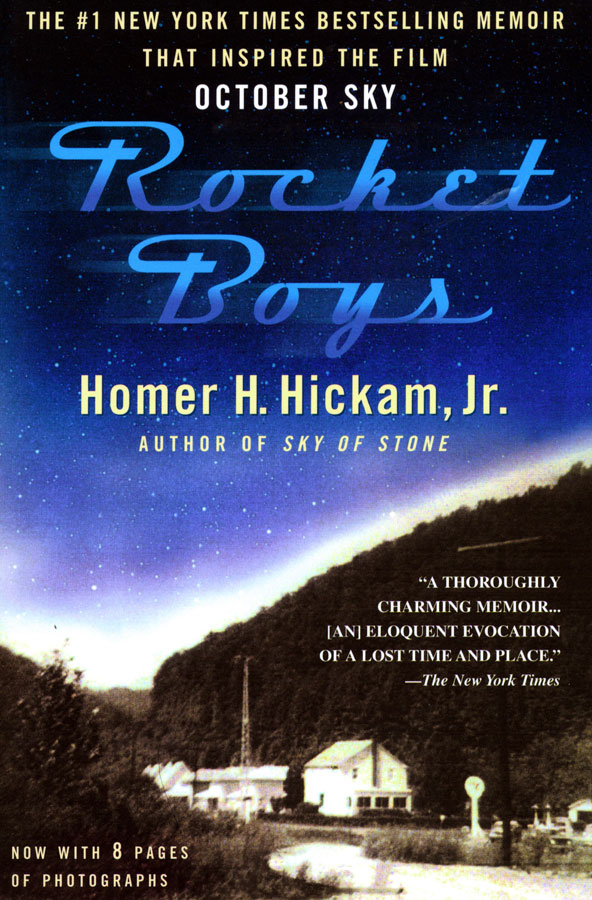
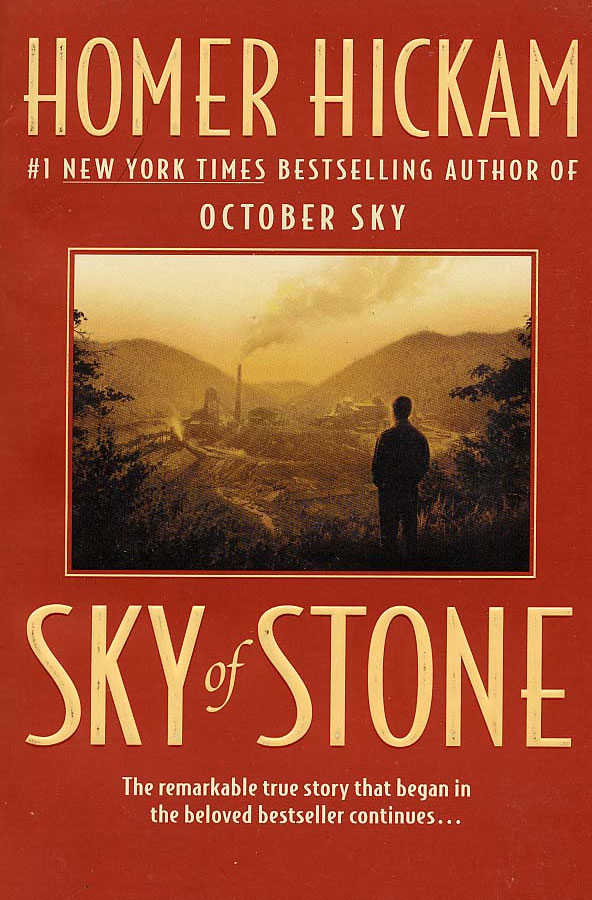
After best-selling author Homer Hickam followed his memoir Rocket Boys (later renamed "October Sky") with the sequels The Coalwood Way and Sky of Stone, he figured he had written enough about his boyhood home of Coalwood, West Virginia.

September 11 changed his mind.

"My book tour for Sky of Stone was just a few weeks after September 11," the retired National Aeronautics and Space Administration engineer recalled during an interview a few weeks ago. "When I stood up to speak to my fans, I sensed they wanted to hear more than about my new book. They were looking for reassurance, and they were looking for wisdom. Since any wisdom I might have came from the people who raised me, I started talking about the things they believed, and how they conquered fear and taught me to be unafraid."

And the residents of Hickam's tiny Appalachian hometown, appropriately named Coalwood, had reason to be afraid. Day after day men risked their lives as they trudged into the coal mines to dig out the rich bituminous ore that lay hundreds of feet below the surface. And every time a miner walked out his front door, his family wondered if he would return at the end of his shift. "It is impossible to do that year after year," Hickam observed, "without developing a philosophy of life that defeats fear and puts aside the feelings of constant dread."

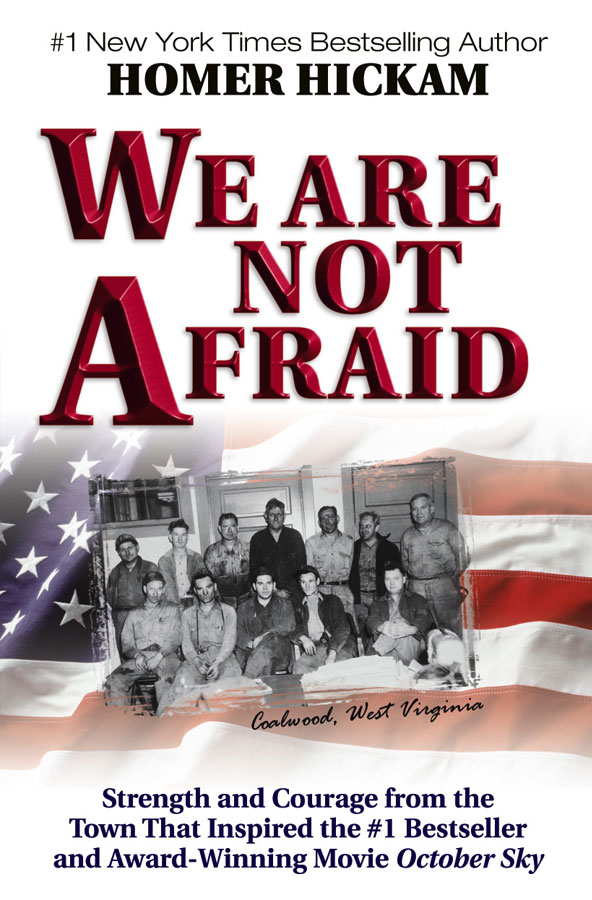
Audiences at Hickam's book signings clamored to hear his historical and personal anecdotes. After C-SPAN showed one of his speeches, hundreds of people across the country urged him to write a book about the attitudes and philosophies that shaped and strengthened the men, women, and children of hardscrapple Coalwood. Although Hickam regarded himself as a memoirist and "didn't want to go off down the inspirational track," he eventually relented, recounting long-ago stories and traditions for We Are Not Afraid: Strength and Courage from the Town That Inspired the #1 Bestseller and Award-Winning Movie October Sky. (Health Communications, Inc., softcover, $12.95).

And it was young Homer's gazing into the October Sky of 1957 that inspired the theretofore listless and drifting high school sophomore. As chronicled in his coming-of-age autobiography, Russia had just beaten America in the space race with its first artificial satellite, and the teenager was instantly fascinated by the endless "beep-beep-beep" sound of "Sputnik" he heard over the family radio. When he saw the satellite streak across the clear night horizon, he realized that his future was not limited to the confines of Coalwood and that the outside world with all its possibilities was indeed within his reach.

Determined to study aerospace engineering and join the American space program, Homer enlisted the help of five of his friends to build their own rockets. When their first crude missile propelled not the rocket but his mother's rose garden fence skyward, they quickly realized they lacked the knowledge necessary to undertake such a project.

School classes immediately held more appeal for the "Rocket Boys," as the townspeople of Coalwood began calling them. Despite the objections of his mine superintendent father, who was determined that his son someday join him underground, Homer and his friends studied aerodynamics and experimented with different types of rocket fuel as their sophisticated rockets reached increasingly higher altitudes. Buoyed by the unfailing support of a devoted teacher, they confronted head-on the seemingly endless obstacles in their path, and in the end won a first-place medal at the 1960 National Science Fair.

"The experience taught us that we could do anything if we put our minds to it," Hickam mused soon after the publication of his memoir. "And that knowledge has made a difference in our careers." All of the Rocket Boys went on to college, with Hickam opting for the industrial engineering program at Virginia Polytechnic Institute (now Virginia Tech) in Blacksburg. After graduating in 1964 he entered the U.S. Army's officer training program. During 1967 to 1968 he served a tour in Vietnam, earning a Bronze Star and the Army Commendation Medal.

In 1981 he realized his boyhood dream when he joined the NASA engineers at the Marshall Space Flight Center in Huntsville. Although Hickam never made it into space himself, he trained astronauts for numerous Spacelab missions, talking them through their experiments while they were in orbit. In November 1997, just a few months before he retired from NASA, an astronaut friend took one of his science fair medals into space aboard the shuttle Columbia.

A second memoir, The Coalwood Way, focused on the Rocket Boys' last Christmas together in 1959; Sky of Stone described the eventful summer of 1961 when Hickam worked in the mine following his freshman year at the Virginia Polytechnic Institute.

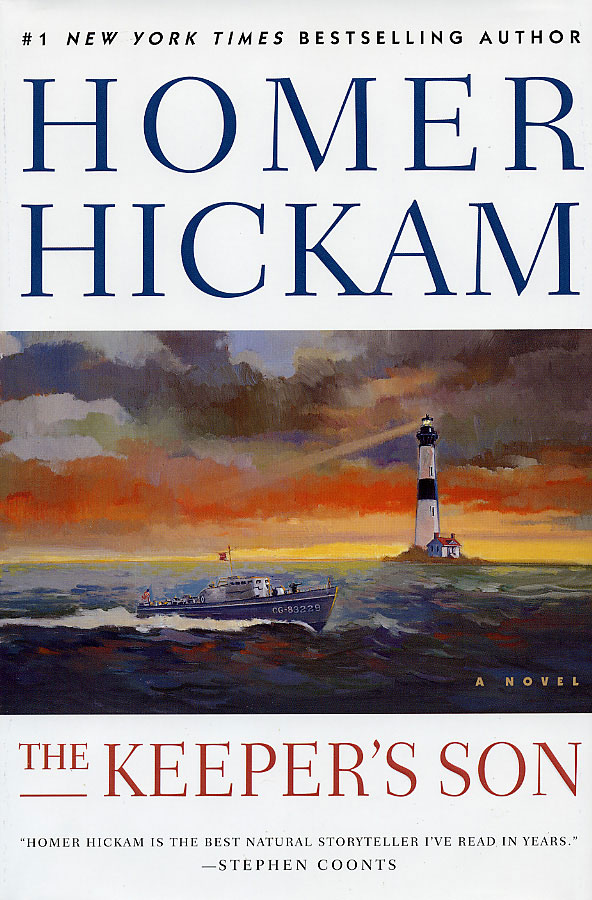
Even though the author plans no additional Coalwood works after We Are Not Afraid, his readers can still expect more books by him, both fiction and nonfiction. He is currently at work on The Keeper's Son, an adventure-romance-war novel about the residents of the Outer Banks during the World War II U-Boat attacks off the North Carolina coast. An avid skin diver, he is also interested in writing a novel with a scuba diving theme. "There seems to be more things to write about than I possibly can do," he admits, "but, somehow, I plan on doing them!"

Homer Hickam and his wife, Linda Terry Hickam, live with their cats in Huntsville, Alabama--Rocket City USA--near the Marshall Space Flight Center. They visit Coalwood occasionally, as does the author's mother, now living in Myrtle Beach, South Carolina, and "still going strong," according to her son.

Thanks to his books, Coalwood is now getting stronger as well. Reporters drop by often, and thousands of fans--along with the original Rocket Boys--throng the streets for the October Sky Festival in the fall and the annual Rocket Boys Day in early summer. The old launch range has been restored, gravel and dirt roads have been paved, and a junior college vocational school (to be named Hickam Hope Center) will soon be constructed. Governor Cecil Underwood has placed copies of October Sky in every school library in the state and uses the book to focus political attention on West Virginia. "This has been just a hoot," Hickam told People magazine in April 1999. "I'm sure one day I'm going to wake up and find out this is just a dream."

Of course, this is simply not going to happen, though it was dreaming that started him on his adventure. And as Hickam and the other Rocket Boys return to their boyhood home to sign books and to talk with the people who visit Coalwood from all over the world, they continue to inspire both rockets and dreams to soar.

From Coalwood to Hollywood: The movie "October Sky"

"Homer, selling a book to Hollywood is like selling your baby to the slave traders," warned October Sky director Joe Johnston to Homer Hickam during the early stages of filming his book Rocket Boys.

Hickam, hired as a technical consultant to the film, was already finding that out. And although he admitted later that "they took my baby and dressed her up in finery," there were still parts of her he did not recognize.

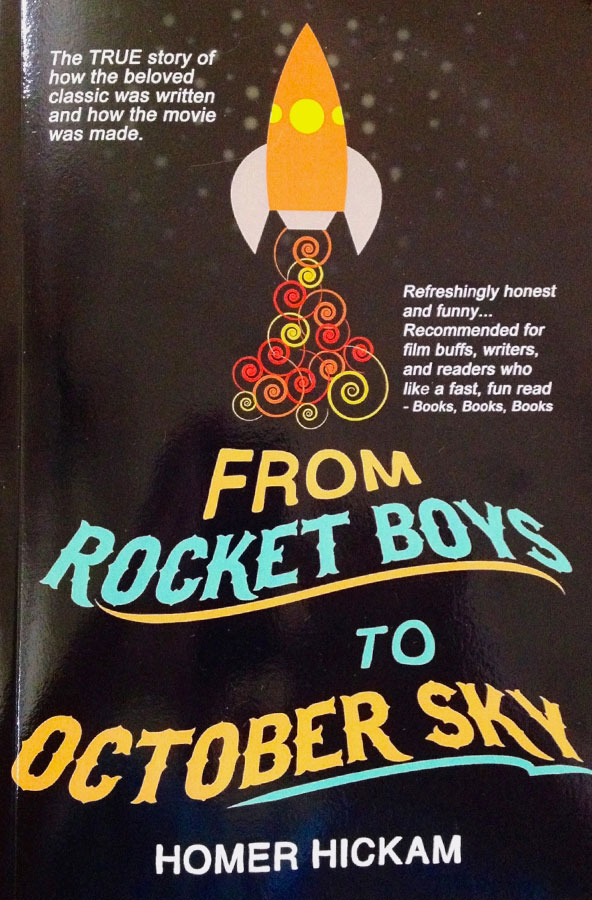
For starters there was the title. Universal Studios bought the motion picture rights based on an outline of his proposed book and on the strength of his article on his rocket-building years in Air & Space Smithsonian. Hickam, writing the book and sending chapters to the screenplay writer as he went along, staunchly defended his own book title, Rocket Boys, believing that keeping the same title would help book sales. The marketing people for Universal Studios, however, conducted surveys which determined that women over 30 years old thought that a movie called "Rocket Boys" was either for children or for men. In a search for a new title, Johnston entered "Rocket Boys" into an anagram program on his computer; the letters spelled "October Sky." Johnston had just finished editing the movie sequence of Sputnik flying overhead on October 5, 1957, and was struck by the eerie coincidence. He knew he had his title.

Hickam, who was on the set for about half of the filming, had better success with some of his other arguments. In fact, as the actors and crew read the real story, the director made changes to keep the screenplay more in line with the book. The original plot line, for example, featured swaggering, cursing street toughs instead of innocent Rocket Boys. "There may have been swearing among the miners, but we boys didn't talk that way," Hickam explained, and insisted that the profanity be cut from the film.

But he did not win all of his arguments. One film sequence he particularly objected to shows him dropping out of high school temporarily to labor as a coal miner to help out his family. Although this scene emphasized the fear he and his friends had as boys of someday ending up in the mine, his immediate reaction was that his parents, who both insisted he go to college, "would have lived in a tree before they would have let me quit school."

But just as Joe Johnston told Hickam, most Hollywood films compress and take liberties with the story lines of their respective books. Hickam, of course, understood this right from the beginning. "I understand that," he told this author during a recent interview. "That's the Hollywood process and I don't stay awake worrying about that." Indeed, he is proud of "October Sky", adding that "I can't argue with the fact that people watch this movie and they're very inspired by it. That's rare these days, and so I have to take my hat off to the way that it all happened. I'm very, very lucky."

Hickam does wish that the motion picture could have been filmed in Coalwood, but the town's remote location and lack of an airport, rental cars, motels, and other movie necessities made that impossible. Lighting was also a factor, for the tall mountains and narrow valleys of West Virginia make for strong daylight only between 10 in the morning and 2 in the afternoon, especially during the winter and early spring. The production company instead settled on the Knoxville area. The old coal mining town of Petros became Coalwood, while downtown scenes were shot in nearby Oliver Springs. The unpredictable weather of eastern Tennessee made shooting difficult, but the frequent rain and overcast skies captured the light-starved bleakness of a fading, coal-dependent town.

Although the motion picture is at times predictable, it is still charming and deeply touching. Producer Chuck Gordon, who was also responsible for the enchanting "Field of Dreams," once again writes of hope and ambitions, while Mark Isham weaves a haunting orchestration and well-juxtaposed selection of 1950s popular songs to underscore the film's various story lines. Hickam's grainy home movies at the end powerfully illustrate that over 30 years ago a few teenaged Rocket Boys from the mountains of West Virginia learned to value dedication and perseverance--and in the process truly did light up the sky. Written with humor, charged with emotion, and delivered with energy, "October Sky" is almost as inspirational as the book on which it is based.

Jack Bales, Reference and Humanities Librarian at Mary Washington College, is the author of books and articles on two of his favorite subjects: American literature and book collecting. He interviewed Homer Hickam extensively for his lengthy essay "Launching Dreams Along with Rockets," published last year in Firsts: The Book Collector's Magazine. Bales' most recent book is Conversations with Willie Morris (University Press of Mississippi).

Reading Groups
Students
Educators
Frequently Asked Questions
Other Writings
Gifts

Advice to Writers
Movies
Newsletters & Photos
Contact Homer


www.homerhickam.com
Copyright © 2006 - All Rights Reserved
All photos and content owned by www.homerhickam.com and cannot be used without permission

Site Designed & Developed by Cre8ive Web, Inc.
Home About Homer Books Rocket Boys/October Sky Homer's Blog