| |
For advice from my agent for first time writers, see www.firstfiction.net
Dear Gentle Writer:
Many writers come to me with questions on writing. Among the more popular are:
If you click on each of the above questions, you will be taken to my answer. I hope each will be helpful to you.
WHERE DID YOU LEARN HOW TO WRITE?

I don't have a good answer to this question.
I always knew I wanted to be a writer.
My third grade teacher, Mrs. Laird, observed I had some talent in this direction and encouraged me.
I had my own newspaper when I was in grade school.
I later helped edit my high school yearbook and wrote a column for the collegiate newspaper at Virginia Tech.
When I came back from Vietnam in 1968, I felt the urge to write and began to scribble short stories.
I sold my first one in 1971 and just kept free-lancing, writing articles for scuba diving magazines, history magazines, aviation magazines, any publication where I could see an angle for a story. I was persistent.
I wanted to be published because I felt like I had something to say.
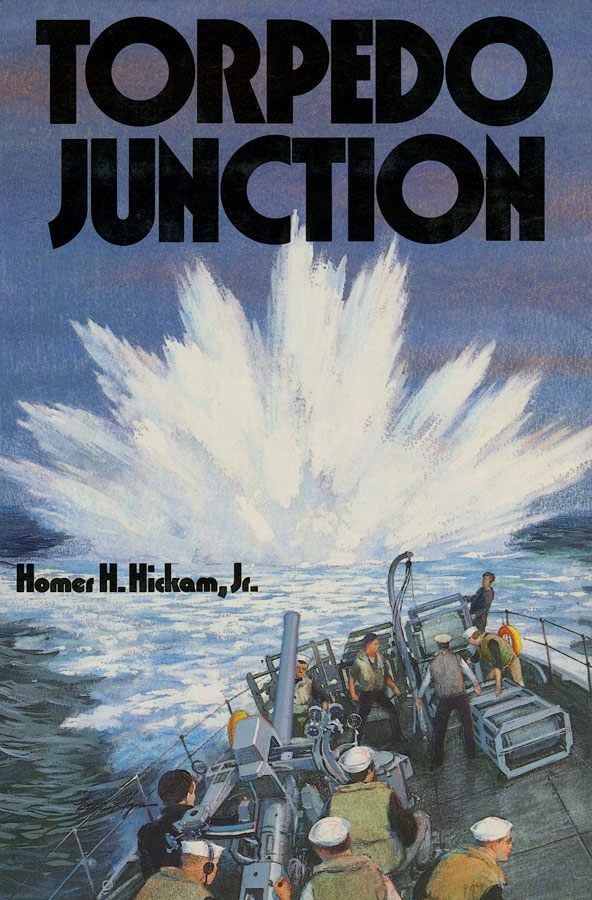
My first book, Torpedo Junction, came about because I believed I had uncovered a story that needed to be told and that I had the skills to tell it.
The bottom line is that I don't think writing can be taught.
It can only be learned by doing, and failing, and questioning the failure, and going on and on until you teach yourself a style that works.
WHAT ARE YOUR WRITING WORK HABITS?

I write every day. Fresh material is written usually in the morning with revisions in the afternoon.
I look forward to writing.
I can do it anywhere; on a pitching ship, in an airplane, while my office is being taken apart around me.
I don't need a beautiful, quiet setting.
Any writer that can't write unless conditions are perfect is in trouble before he starts.
HOW DO I WRITE A GOOD STORY?

I believe to be a good writer, you must be a good reader.
If reading is not a part of your life, you will never know what it takes to put together a good story.
When you read, you should be asking yourself, if only in the back of your mind, what is it about this story I like?
What is it that's making me want to turn the page? What is it I don't like?
Why am I enthralled? Bored? Energized? Put to sleep?
By reading a lot, especially in the genres you're interested in, you will subconsciously absorb styles and techniques.
Then, armed with technique and at least an idea on what is expected within the genre, the trick is to write, write, and write some more.
Never stop! And never, never give your work to your spouse or your friends to read if you expect an honest reply.
Let your work cool and read it yourself, again and again, editing as you go.
Hone it until it's perfect!
HOW DO I GET PUBLISHED?

This is such a broad question, a cogent answer is difficult.
It is tempting to simply say "Write good stuff and you will be published," but I think what this question indicates a need to be educated on the nuts and bolts of writing for publication.
Many books have been written on this subject and the beginning writer can use them to help educate himself.
One of the very best books on the subject, and one I strongly recommend, is The Writer's Market.
Click on it and you will be taken to a site where you can purchase it.
This book will tell you all you need to know about the mechanics of the modern publishing world and how a beginning writer can learn to work within it.
DO I NEED AN AGENT AND, IF SO, HOW DO I GET ONE?

For shorter works, such as short stories and articles meant for magazines, I do not believe a writer needs an agent.
They do need to study the magazine in question, then write a dynamite query letter to the magazine editors and knock their socks off with their vision.
They should also include a self-addressed stamped envelope for a return reply.
If they write back and ask you to send your manuscript to them, then, and only then, send it!
Don't waste your time or money by sending a manuscript cold. It will only end up on a slush pile somewhere.
All this is explained more in depth in The Writer's Market.
For longer works, such as novels, memoirs, and non-fiction books, I believe you need a good agent.
But what is an agent? An agent is a person who represents you and your work and uses his knowledge of the publishing world to place it as best he can.
The world of publishing is a dynamic one and few writers can keep up with it.
The gatekeepers at the larger publishers are the editors.
Good agents maintain a relationship with these editors and know what kind of books they are looking for.
Agents can also advise writers on tweaking their work to make it more attractive to potential editors.
But never, never, NEVER pay an agent to read your work.
Agents are supposed to get paid only when they sell your manuscript to a publisher.
You don't need to pay anybody to read your stuff. Trust me.
If you are honest with yourself, you will know very well if your work is good enough to be published.
If it isn't, hone it until it is!
My literary agent is a smart young man by the name of Frank Weimann.
Frank is a bulldog in the publication marketplace.
He works really hard for me.
Like most agents, sometimes he is looking for new writers and sometimes he isn't.
It depends on how busy he is with his present stable of authors.
But Frank is always willing to be contacted by writers with good ideas and talent.
He will help you if he can.
To make contact with him, go to his Web site at www.firstfiction.net.
Study his site carefully and follow his instructions for submitting your ideas and manuscripts precisely.
MAY I SEND YOU MY MANUSCRIPT SO THAT YOU CAN BETTER ADVISE ME?

No. It's not that I think you're a terrible person or even a lousy writer, it's just I'm neither a publisher or an agent and I also don't have time to give your work the care it deserves.
There's also some unscrupulous folks who'd be happy to sue me if they thought I'd stolen their marvelous writing and made it into my own.
Just to reiterate: Please do not send me, or should you meet me in person, hand me your manuscript.
I'm sorry but it will not be read.
HAVE YOU WRITTEN AN ARTICLE THAT MIGHT HELP A BEGINNING WRITER?

Some years ago, I wrote the below piece to help potential memoir writers.
I think it can help you no matter if you want to write fiction or non-fiction.
Read it and heed its points. Remember, people mostly want to read about other people. That's the key.
Don't ever forget it and you'll be a successful writer.
Advice for the Memoir Writer by Homer Hickam
Every writer has a story he must tell but sometimes it has to wait, stew in its own juices, until both the writer and the story is ready.
I believe this is especially true of memoirs.
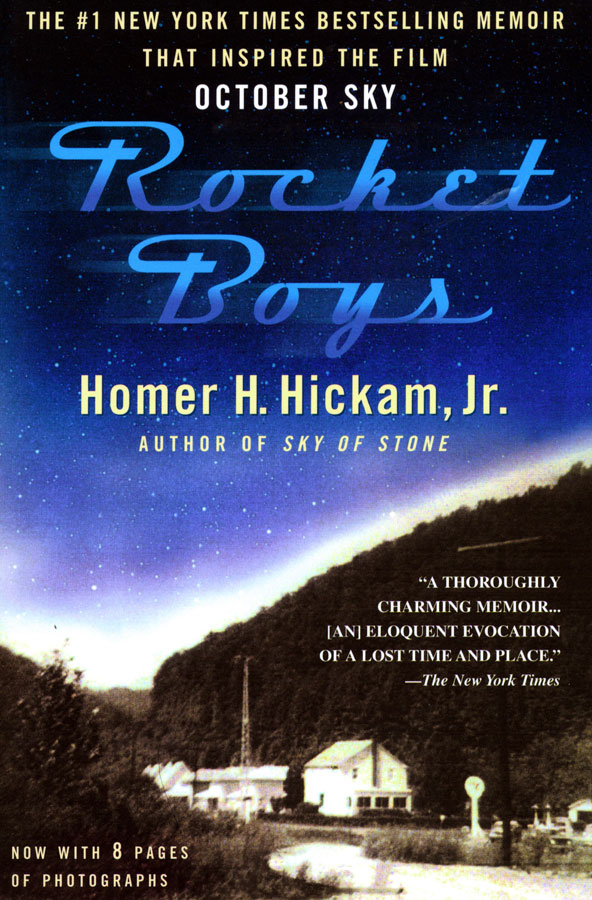
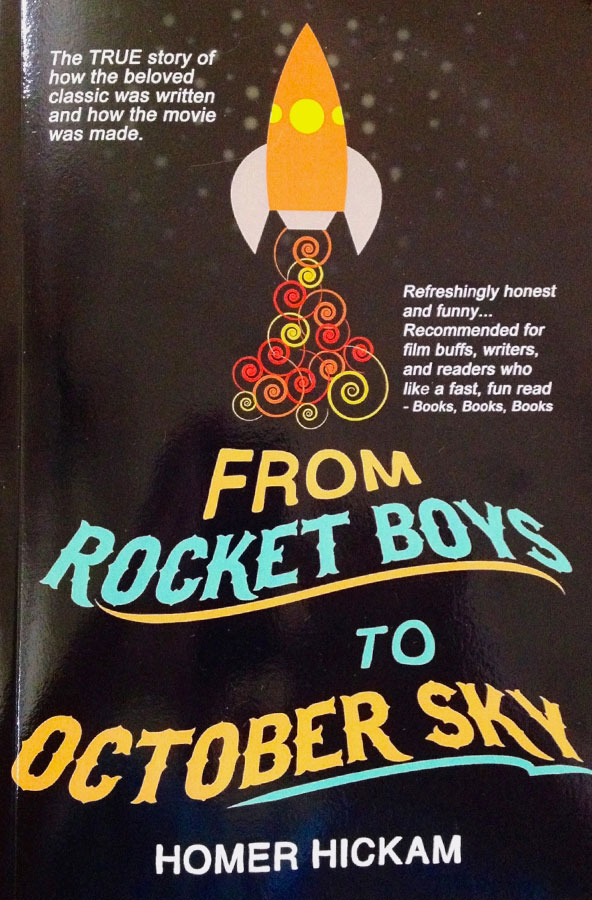
Memoirs are tricky things to write and, as in all things, timing is everything. I don't think Rocket Boys: A Memoir (also known as October Sky) would have been half so well received had I not waited until the era I wrote about had receded into a sort of timelessness.
As it is, 40 years later, the story has been a phenomenon ever since I first penned a short article for Air & Space magazine telling the simple story of six boys who lived in a small West Virginia coal town and, at the dawn of the space age, decided to build their own rockets. Soon after publication, I received a huge flood of letters and phone calls from avid readers. Within a year, I had a contract with Universal Studios for a major motion picture to be based on a book I was still writing and then, when I finished it, enjoyed watching a spirited auction for it by top New York publishers. Timing, however, isn't absolutely everything. Here's some other tips I learned in the process of writing my memoirs:
- Know your destination. I think it would have been catastrophic if I'd just started writing Rocket Boys without a specific idea as to where I was going. If you, the writer, are not certain what your story is, you'll quickly lose your readers. When I wrote the first paragraph of Rocket Boys, I laid out the story and the destination to not only my readers but to myself:
Until I began to build and launch rockets, I didn't know my home town was at war with itself over its children, and that my parents were locked in a kind of bloodless combat over how my brother and I would live our lives. I didn't know that if a girl broke your heart, another girl, virtuous at least in spirit, could mend it on the same night. And I didn't know that the enthalpy decrease in a converging passage could be transformed into jet kinetic energy if a divergent passage was added. The other boys discovered their own truths when we built our rockets, but those were mine.
Some critics have called this opening paragraph the perfect opener for a memoir. Although I never changed a single word of it after I wrote it, I still left plenty unsaid, enough to make the reader want to turn the page and see how I learned those "truths."
- Write about interesting people. Here's a great secret most writers either don't know or forget. People are more interested in people than the plot of the story. Beginning writers are always suggesting plots to me but when I ask them about the characters in their stories, they tend to draw a blank as if they can think about them as they go along. Trust me. It isn't the story that keeps us reading, it's the people in the story. This is just as true with memoirs as it is with fiction. Decide early on who is going to be in your story and give them enough characteristics to make them intriguing. That doesn't mean to layer on quirky mannerisms. It does mean to use a few deft words to define the people and make them interesting.
- Tell the truth but also tell a story. This simple admonishment seems often lost on memoir writers. It's your job as a writer always to tell a story even within the restrictions of the truth. A memoir, just as with fiction, should have a beginning, middle, and an end. To make a story out of real life requires very careful judgment, choosing only those episodes in your life that keep the story on track. In Rocket Boys, for instance, I could have written much about my proud position as head drummer in the school band. Had I chosen to write much about it, though, it might have interfered with the main thread of the story which had nothing to do with high school drumming. This is not to say that having parallel threads in your memoir won't work. In Rocket Boys, I had four primary strands that I kept interweaving: the building of our rockets, the tensions in my family, my attempt to win the girl I loved, and the evolution of the little town of Coalwood. I moved between them interchangeably but always with the intention to have those threads wrapped tighter and tighter until they become as one. The story of my adventures as a drummer boy would have been a distraction and would have never wrapped itself as tightly into the story as I wished.
- Set your hook early. My years as a free-lance writer for a variety of magazines taught me the importance of hooking the reader very early in the manuscript. Editors will toss a manuscript on the return pile if that first paragraph doesn't grab them, so I learned quickly to gain their attention. A memoir is no different. To ruminate up front, or to slowly evoke a scene or an atmosphere for many pages at the beginning of a memoir, or any book, rarely works. In Rocket Boys, my hook was my family dynamics. After my grandfather told my mother that I was just like my father, I ended the first chapter with this paragraph:
Dad slapped open the screen door and came out on the porch as if to argue with her. Mom turned away from him and I saw his eyes, usually a bright hard blue, soften into liquid blots. I snuggled my face into her neck while Mom continued to rock and hold me, still singing her quietly insistent song: No you're not. No you're not. All through my growing up years, she kept singing it, one way or the other. It was only when I was in high school and began to build my rockets that I finally understood why.
The hook is set: what was the tension between my mother and father, and what was it about my rockets that finally let me understand it? Most readers will want to know.
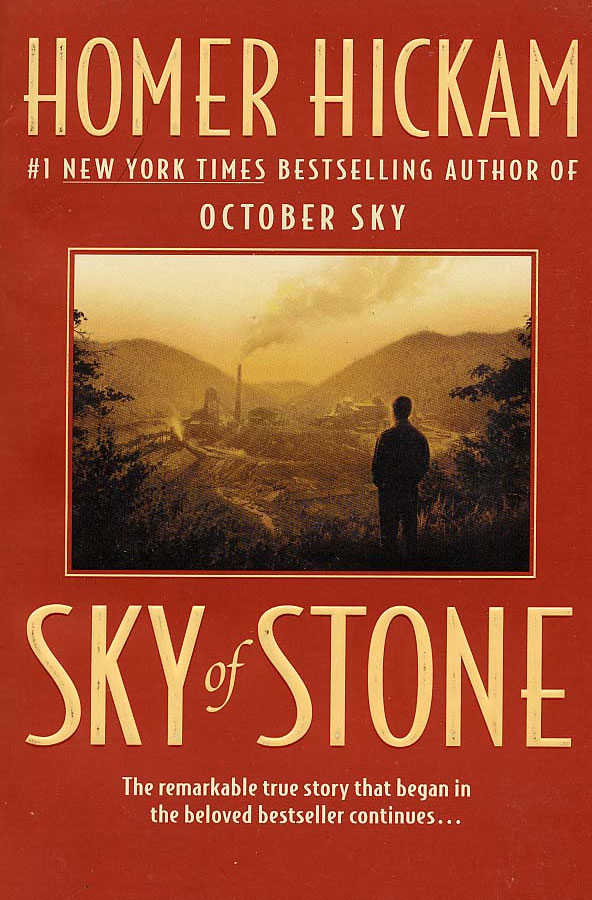
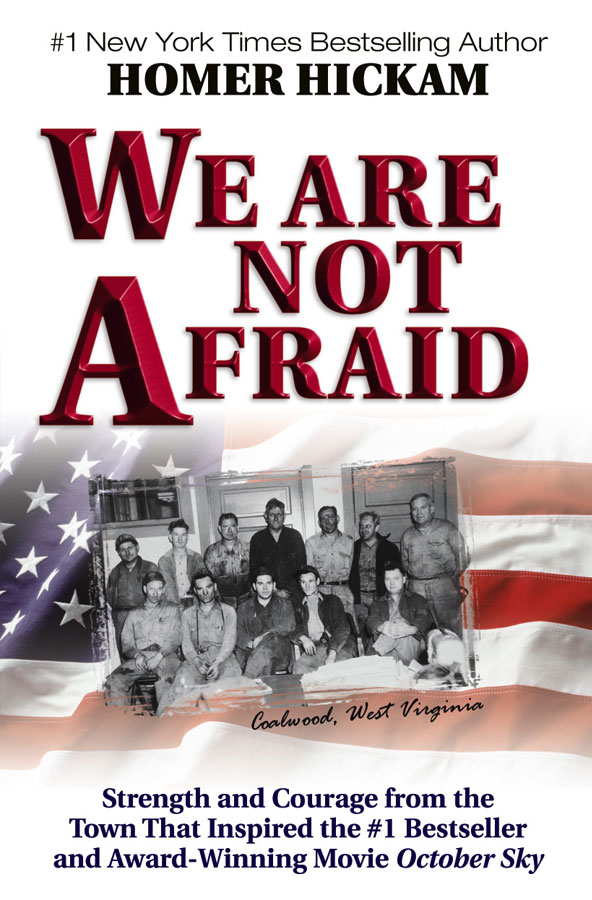
- Know when start and when to quit. A memoir writer is tempted to tell everything about their life from birth to the present. Sometimes that works, but most often, it goes too far. Carefully determine the timeframe of the story you want to tell and stick to it. If there's enough interest, who knows? You might get to write a sequel, maybe a whole series of them. That's what happened to me. After Rocket Boys, I ended up writing three more best-selling "Coalwood" memoirs: The Coalwood Way, Sky of Stone, and We Are Not Afraid.
DO YOU KNOW ANY LINKS THAT MIGHT BE HELPFUL TO WRITERS?

Here are some of my favorites:
www.helpmewithmybook.com
www.writersdigest.com
www.authorsontheweb.com
www.writers.net/agents.html
|
|


|
|